Columbia Science Commits
  • HOME
  • ABOUT
    • Overview
    • The Columbia Commitment
    • Message from the President
    • Strategic Planning
    • Leadership
  • PRIORITIES
    • Fundamental Science
    • Neuroscience
    • Climate Response
    • Precision Medicine
    • Next Generation Nano
    • Data and Society
  • NEWS
    • Science News
    • Press Releases
    • Video Gallery
  • PARTNERS
    • All Partners
    • The Fu Foundation School of Engineering and Applied Science
    • Columbia University Medical Center
    • Columbia Zuckerman Institute
    • The Earth Institute
    • Lamont-Doherty Earth Observatory
    • Columbia | Precision Medicine
    • Data Science Institute
    • Columbia Nano Initiative
  • JOIN US
    • Commit
    • Twitter
Select Page
How Do Fruit Flies Grow Legs? Solving a Molecular Mystery

How Do Fruit Flies Grow Legs? Solving a Molecular Mystery

August 27, 2018
neuroscience   zuckerman institute  

A new study helps settle a long-standing scientific debate about how embryos develop and offers clues for diseases like cancer, in which normal development patterns go awry.

The Naturally Rational Brain? How People Use, and Lose, Preexisting Biases to Make Decisions

The Naturally Rational Brain? How People Use, and Lose, Preexisting Biases to Make Decisions

August 16, 2018
neuroscience   zuckerman institute  

New research shows that the human brain employs precise, mathematical logic to decision-making, revealing new insight into the brain science that guides learning.

A Brain Scientist and Volcanologist Investigate Why Some Volcanoes Turn Explosive

A Brain Scientist and Volcanologist Investigate Why Some Volcanoes Turn Explosive

July 21, 2018
neuroscience   physics   zuckerman institute  

A volcanologist and biomedical engineer at Columbia University have joined forces to understand how particle-level interactions influence a volcano’s personality.

New Study in Electric Fish Reveals Brain Mechanisms for Distinguishing Self from Other

New Study in Electric Fish Reveals Brain Mechanisms for Distinguishing Self from Other

July 11, 2018
neuroscience   zuckerman institute  

The brain’s remarkable ability to perceive the outside world relies almost entirely on its capacity to tune out noise generated by the body’s own actions, says a new study.
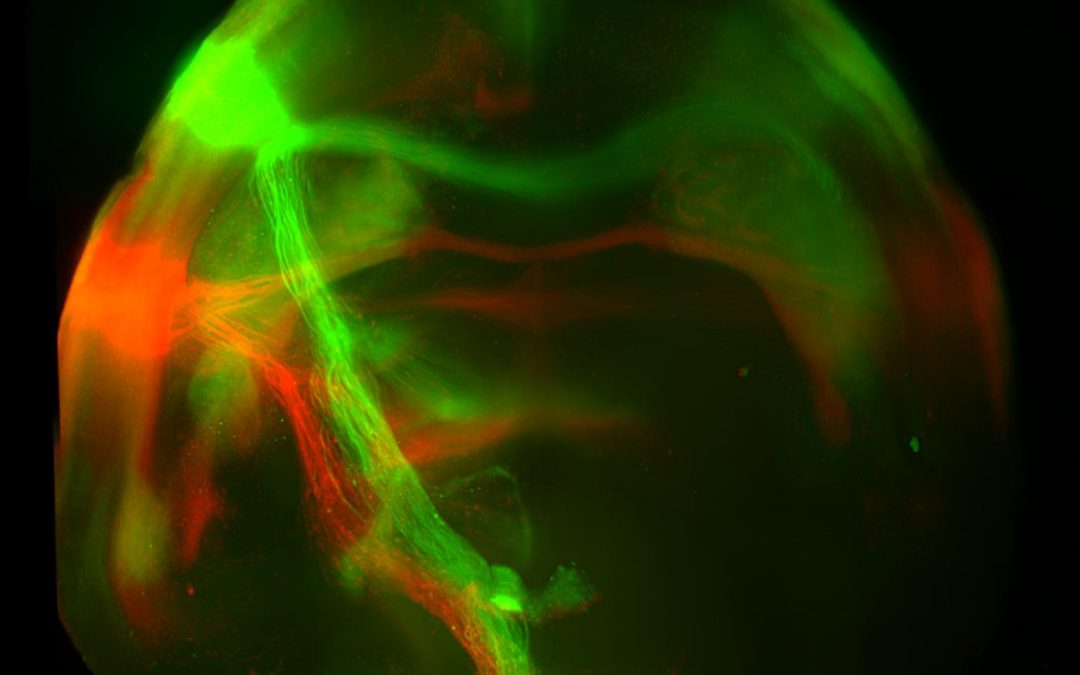
No More Sweet Tooth? Scientists Switch Off Pleasure from Food in Brains of Mice

No More Sweet Tooth? Scientists Switch Off Pleasure from Food in Brains of Mice

May 30, 2018
neuroscience   zuckerman institute  

New research in mice has revealed that the brain’s underlying desire for sweet, and its distaste for bitter, can be erased by manipulating neurons in the amygdala, the emotion center of the brain.

« Older Entries
Next Entries »
Close